


It’s one of the most common complaints in maritime connectivity:
“The internet is too slow – something must be wrong.”
But in many cases, the issue isn’t a fault. It’s a mismatch between expectations and reality, especially on smaller VSAT links.
Let’s break it down in simple terms.

What Can You Actually Do with a 256/128k VSAT Link?
A 256 kbps down / 128 kbps up link is extremely limited by today’s standards. Think of it like a narrow doorway, where only a small number of data “users” can pass through at once.
What works reasonably well
- Basic text email
- Light web browsing (text-heavy pages)
- Small system updates (charts, logs, telemetry)
- Background monitoring and device communications
What struggles
- MS Teams (even audio is borderline)
- Remote desktop tools like TeamViewer
- Web apps with images or uploads
- File transfers or backups
What is effectively unusable
- Video calls (Teams, Zoom, etc.)
- YouTube, TikTok, Instagram, or any streaming
- Large updates, backups, or file transfers
A single video stream (even low quality) can fully consume or exceed your entire link.
The Real Issue: Too Many Users, Not Enough Bandwidth
Here’s a simple way to understand it:
Even a 10 Mbps shared link (much bigger than 256k) can only handle:
- 2 users watching HD video
- 4–6 users watching SD video
- 2–3 users doing heavy mixed usage
Now imagine a 256k link with 10–15 crew members actively using it. It’s not a performance issue. It’s basic physics of bandwidth.

Why It Feels Even Slower Than It Should
There are three key reasons:
1. Contention (Everyone Using It at Once)
- Multiple users competing for a very small pipe
- Even web browsing becomes slow
2. Hidden Data Usage
- Social media apps auto-loading videos
- Background sync (phones, apps, updates)
- Messaging apps with media downloads
One TikTok or YouTube stream can take everything.
3. Satellite Latency
VSAT uses geostationary satellites, which means:
- 600–900 ms delay on every request
- Slower web page loading
- Sluggish apps and remote tools
Even when bandwidth is available, it still feels slow.
The Expectation Gap
A key question every operator should ask:
“What do you expect users to do on this link?”
Because:
- A 64k–128k link = email + basic comms
- A 256k–512k link = light browsing for a few users
- Anything involving video or modern apps = not realistic
Trying to run modern applications on a small VSAT link is like trying to push 20 people through a single doorway at once. They will eventually get through—but very slowly.


The Biggest Bandwidth Killers on VSAT
Based on real vessel data, the most common causes of congestion are:
- HTTP video (YouTube, Teams video, training)
- Social media platforms (TikTok, Facebook, Instagram)
- File transfers and backups
- Software updates running during the day
Even one user can saturate the entire link.
So, What Can You Do?



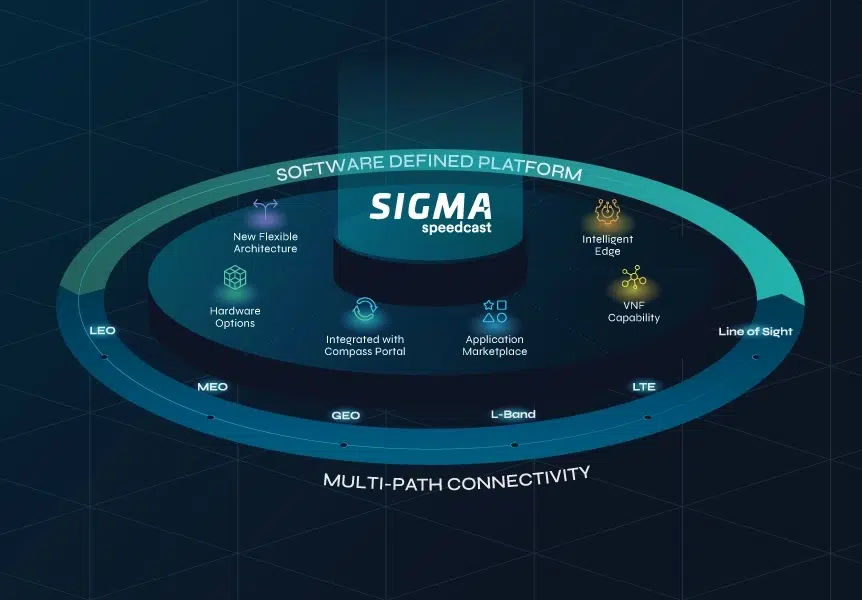
4. Use Intelligent Traffic Management
Even with higher bandwidth, control is essential. With Speedcast SIGMA, you can:
- Prioritize business-critical traffic
- Limit or block video and social apps
- Allocate bandwidth by user or application
- Balance traffic across multiple links (VSAT and Starlink)
This ensures bandwidth is used where it matters most.
A Smarter Way Forward
Most “slow internet” complaints on VSAT aren’t faults, they’re capacity and usage issues.
If you’re running:
- Small bandwidth links
- Multiple users
- No controls
Slow performance is unavoidable.
To improve performance, you need to combine:
- Realistic expectations
- Proper bandwidth sizing
- Traffic control and prioritization
- Modern connectivity options like LEO
That combination is exactly what Speedcast delivers, helping vessels move from uncontrolled congestion to predictable performance.
Still experiencing slow connectivity?
Contact Speedcast to optimize your connectivity and get the most out of your network, whether VSAT, Starlink, or a hybrid solution.